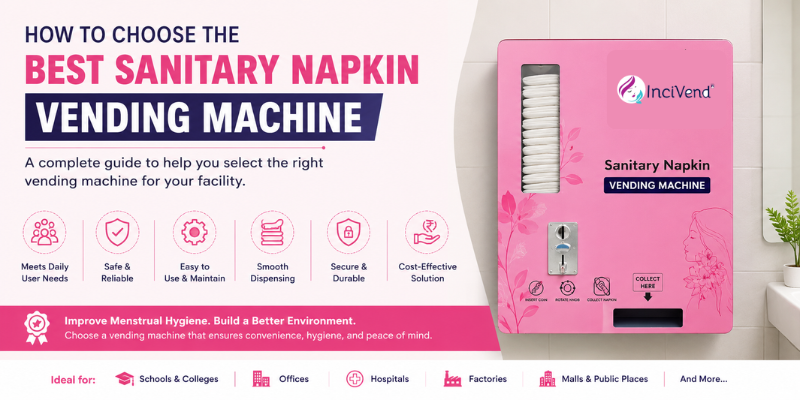
How to Choose the Best Sanitary Napkin Vending Machine
The best sanitary napkin vending machine depends on your facility’s daily user traffic, installation location, dispensing capacity, ease of maintenance, and safety features. Schools, hospitals, offices, factories, and public washrooms often require different machine capacities and dispensing mechanisms. Choosing the right model helps improve menstrual hygiene management, ensures easy access to sanitary pads, and reduces maintenance requirements.
Access to menstrual hygiene products plays an important role in creating safe, inclusive, and hygienic environments. Installing a sanitary napkin vending machine allows women and girls to access sanitary pads whenever they need them, reducing inconvenience during school, work, or travel.
Today, sanitary napkin vending machines are widely installed in educational institutions, hospitals, offices, shopping malls, hotels, factories, airports, railway stations, and public washrooms. However, selecting the right machine requires more than comparing prices. Capacity, reliability, installation, maintenance, and user convenience all influence long-term performance.
This guide explains how to choose the best sanitary napkin vending machine and the key factors you should evaluate before making a purchase.
What Is a Sanitary Napkin Vending Machine?
A sanitary napkin vending machine is a dispensing unit that stores sanitary pads and releases one pad at a time when activated manually or electronically. These machines improve access to menstrual hygiene products while maintaining privacy and convenience.
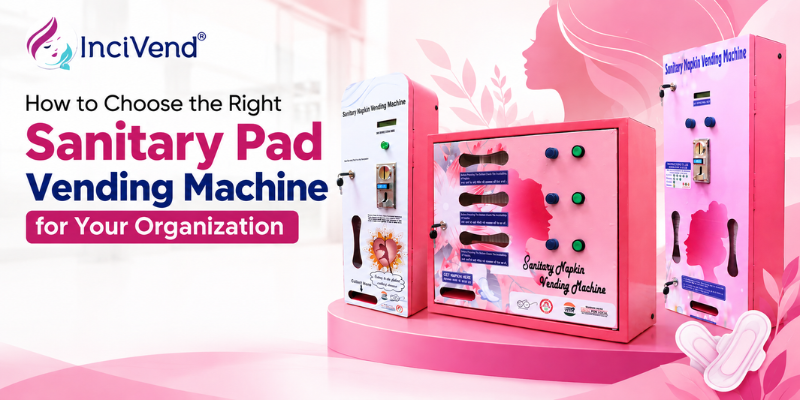
Depending on the model, a vending machine may operate using coins, tokens, smart cards, UPI-enabled payment systems, or a push-button mechanism. Many modern machines are designed for wall-mounted installation, making them suitable for washrooms with limited space.
Why Choosing the Right Machine Matters
Selecting the right sanitary napkin vending machine directly affects user experience and operational efficiency.
A machine with insufficient capacity may require frequent refilling, while an oversized model may not be cost-effective for facilities with low daily usage. Reliable dispensing mechanisms, durable construction, and easy maintenance also contribute to long-term performance.
Choosing the right model helps organizations:
- Improve menstrual hygiene management
- Provide convenient access to sanitary pads
- Reduce maintenance time
- Support user privacy
- Enhance restroom facilities
Factors to Consider Before Buying a Sanitary Napkin Vending Machine
1. Daily User Capacity
Start by estimating how many people will use the machine each day.
A school with hundreds of students requires a higher-capacity machine than a small office with limited staff.
Choosing the correct capacity reduces the frequency of refilling and helps ensure continuous availability.
2. Type of Dispensing Mechanism
Different vending machines use different dispensing systems.
Common options include:
- Coin-operated
- Push-button
- Automatic dispensing
- Smart card-enabled
- Digital payment-enabled
Select a dispensing mechanism that matches the needs of your users and the operating environment.
3. Manual or Automatic Machine
Manual vending machines are simple, affordable, and suitable for locations with moderate usage.
Automatic vending machines provide greater convenience and are often preferred in high-footfall locations such as hospitals, airports, and shopping malls.
4. Build Quality
A vending machine should withstand daily use without frequent repairs.
Look for features such as:
- Rust-resistant construction
- Durable metal housing
- Strong locking system
- Scratch-resistant finish
- High-quality dispensing components
Robust construction helps extend the lifespan of the machine.
5. Installation Space
Evaluate the available space before selecting a machine.
Wall-mounted models work well in compact washrooms, while larger free-standing machines suit facilities with higher user traffic.
Proper placement also improves accessibility and encourages regular use.
6. Ease of Refilling
A vending machine should allow staff to refill sanitary pads quickly and efficiently.
Machines with large storage compartments and simple loading mechanisms reduce maintenance time and improve operational efficiency.
7. Maintenance Requirements
Regular maintenance keeps the vending machine functioning smoothly.
Before purchasing, check:
- Cleaning requirements
- Availability of spare parts
- Ease of servicing
- Manufacturer support
- Maintenance schedule
Choosing a low-maintenance model helps reduce long-term operating costs.
8. Security Features
Public installations require secure machines.
Look for features such as:
- Lockable storage compartments
- Tamper-resistant design
- Durable dispensing mechanism
- Strong cabinet construction
These features help protect the machine and prevent misuse.
9. Compatibility with Sanitary Pad Sizes
Not all vending machines support every sanitary pad size.
Before purchasing, confirm that the machine is compatible with the sanitary pads your organization plans to provide.
This helps prevent dispensing issues and improves user satisfaction.
10. Warranty and After-Sales Support
Reliable after-sales support is essential for long-term performance.
Choose a manufacturer that offers:
- Product warranty
- Technical assistance
- Spare parts availability
- Installation guidance
- Maintenance support
Good service support helps minimize downtime and extends the machine’s lifespan.
Types of Sanitary Napkin Vending Machines
Coin-Operated Machines
Users insert a coin to receive a sanitary pad.
These machines suit schools, colleges, and public facilities.
Push-Button Machines
Users press a button to dispense a sanitary pad.
These models are easy to operate and require minimal training.
Automatic Vending Machines
Automatic machines dispense sanitary pads electronically and often include advanced control systems.
They are ideal for hospitals, airports, and commercial buildings.
Smart Vending Machines
Some modern vending machines support digital payments, usage monitoring, and remote management.
These systems are suitable for organizations seeking advanced facility management solutions.
Which Sanitary Napkin Vending Machine Is Best for Different Facilities?
Schools and Colleges
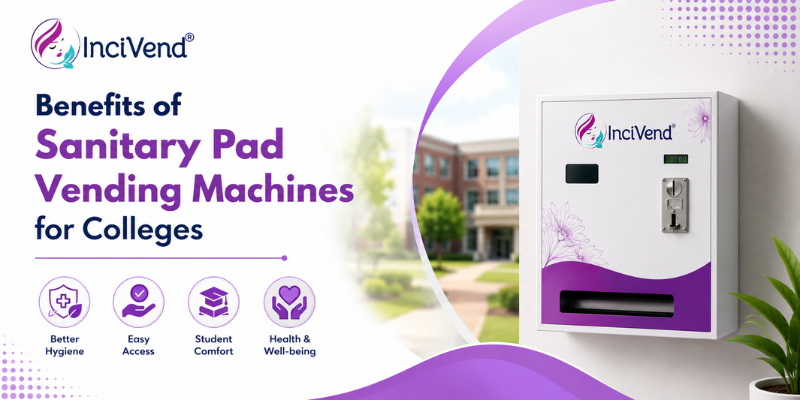
Choose machines with medium to high storage capacity, simple operation, and durable construction.
Hospitals
Hospitals benefit from automatic machines that provide reliable dispensing and support continuous availability.
Corporate Offices
Wall-mounted machines with compact designs fit well in office washrooms while providing convenient access for employees.
Factories
Industrial facilities should select heavy-duty machines that can withstand frequent daily use.
Shopping Malls and Public Buildings
High-capacity automatic vending machines are suitable for locations with continuous visitor traffic.
Common Mistakes to Avoid
Many organizations choose vending machines based only on price.
Avoid these common mistakes:
- Ignoring daily usage requirements
- Selecting insufficient storage capacity
- Choosing poor-quality construction
- Overlooking maintenance requirements
- Ignoring warranty coverage
- Installing the machine in inaccessible locations
Evaluating the total cost of ownership rather than only the purchase price often leads to better long-term value.
Frequently Asked Questions
Consider daily user traffic, storage capacity, dispensing mechanism, installation space, build quality, maintenance requirements, and after-sales support before selecting a machine.
Schools typically benefit from durable wall-mounted or coin-operated machines with medium to high storage capacity and simple dispensing mechanisms.
Look for reliable dispensing, durable construction, easy refilling, secure locking, compatibility with standard sanitary pads, and dependable manufacturer support.
Yes. Many offices install compact wall-mounted vending machines to provide employees with convenient access to menstrual hygiene products.
Automatic machines are often more suitable for high-traffic locations because they provide convenient dispensing and require minimal user effort. Manual models work well in facilities with moderate daily usage.
Choose a Reliable Sanitary Napkin Vending Machine with Incivend
Providing easy access to menstrual hygiene products begins with selecting the right vending machine. Whether you manage a school, hospital, office, factory, hotel, or public facility, Incivend offers sanitary napkin vending machines designed for reliability, ease of use, and long-term performance.
Our experts can help you choose the right model based on your daily user traffic, installation space, and operational requirements. Contact Incivend today to explore sanitary napkin vending machine solutions that support better menstrual hygiene management and create cleaner, more inclusive washroom facilities.