

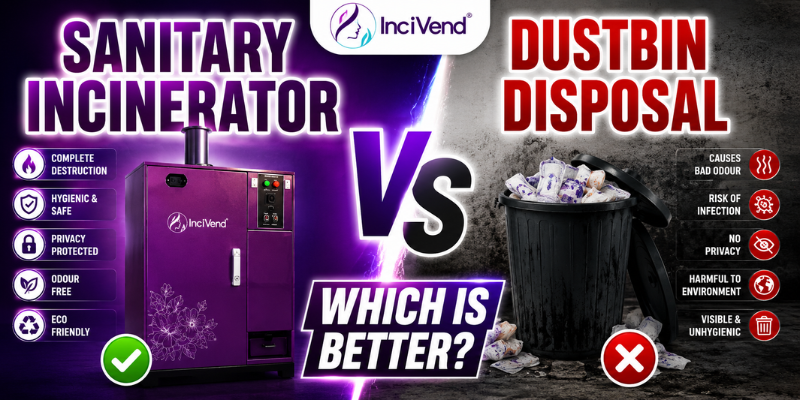
Sanitary Incinerator vs Dustbin Disposal: Which Is Better for Menstrual Waste Management?
A sanitary incinerator is generally the better option for menstrual waste management because it destroys used sanitary pads at high temperatures, reducing odor, bacteria, and the volume of waste. Dustbin disposal relies on municipal waste collection and can lead to hygiene issues, unpleasant smells, and increased landfill waste if not managed properly. For schools, hospitals, offices, factories, and public washrooms, sanitary incinerators provide a more hygienic, private, and efficient solution for disposing of menstrual waste.
Why Proper Menstrual Waste Disposal Matters
Proper menstrual waste disposal helps prevent bacterial growth, unpleasant odors, environmental pollution, and health risks. It also protects sanitation workers, keeps washrooms clean, and supports safe menstrual hygiene. Using proper disposal methods, such as sanitary incinerators or sealed sanitary bins, ensures menstrual waste is managed hygienically and responsibly.
When comparing Sanitary Incinerator vs Dustbin Disposal, the decision is not only about convenience—it also involves hygiene, operational efficiency, waste management practices, and user experience. Understanding the advantages and limitations of each method helps organizations choose the most suitable solution.
What Is a Sanitary Incinerator?
A sanitary incinerator is a machine that safely disposes of used sanitary pads by burning them at high temperatures. It reduces menstrual waste, eliminates odors and bacteria, and supports hygienic waste disposal. Sanitary incinerators are commonly installed in schools, hospitals, offices, factories, and public washrooms.
Modern sanitary incinerators are commonly installed in:
- Schools and colleges
- Hospitals and healthcare facilities
- Corporate offices
- Manufacturing units
- Hotels and hostels
- Airports and railway stations
- Shopping malls
- Public washrooms
Many models are compact, easy to operate, and designed for installation inside or near women’s washrooms.
What Is Dustbin Disposal?
Dustbin disposal is the process of placing used sanitary pads in a waste bin for collection and disposal through the regular waste management system. It is the most common disposal method but may lead to odor, bacterial growth, and increased landfill waste if not managed properly.
This method is widely used because it is simple and inexpensive to implement. However, it relies on regular cleaning, proper waste segregation, and timely collection to maintain hygiene standards.
Sanitary Incinerator vs Dustbin Disposal: Comparison Table
| Feature | Sanitary Incinerator | Dustbin Disposal |
|---|---|---|
| Disposal Method | Burns menstrual waste at high temperatures | Stores waste until collection |
| Hygiene | High | Moderate |
| Odor Control | Excellent | Limited |
| Bacteria Reduction | Yes | No |
| Waste Volume | Greatly reduced | Remains the same |
| Environmental Impact | Reduces landfill waste | Increases landfill waste |
| Best For | Schools, hospitals, offices, public washrooms | Homes and places without incinerators |
Detailed Comparison
1. Hygiene
One of the biggest differences in Sanitary Incinerator vs Dustbin Disposal is hygiene.
When sanitary pads remain in a dustbin for several hours or days, bacteria can multiply, especially in warm and humid conditions. Overflowing bins may also affect the cleanliness of the washroom.
A sanitary incinerator reduces this problem by disposing of menstrual waste soon after use, helping maintain a cleaner restroom environment and reducing exposure to used sanitary products.
2. Odour Control
Poorly managed sanitary bins can produce unpleasant odours that affect the user experience.
Dustbin disposal requires frequent emptying and cleaning to prevent smells from developing.
Sanitary incinerators help reduce odour because waste is destroyed instead of being stored for extended periods.
3. Waste Management
Dustbin disposal depends on waste collection services. Every used sanitary pad must be transported, handled, and eventually processed or sent to a landfill.
Sanitary incinerators reduce the volume of menstrual waste by converting it into ash, making waste management more efficient and reducing the amount of waste requiring transportation.
4. Safety for Housekeeping Staff
Housekeeping teams often handle sanitary waste while emptying bins.
With dustbin disposal, staff may come into contact with contaminated waste if bins are not properly managed or if waste is incorrectly wrapped.
Sanitary incinerators reduce the need for frequent manual handling, helping improve workplace hygiene and safety.
5. Environmental Considerations
Many disposable sanitary pads contain plastic-based materials that take a long time to decompose in landfills.
Dustbin disposal contributes to landfill accumulation unless waste is managed through specialized treatment systems.
Modern sanitary incinerators can help reduce landfill waste volume when used according to manufacturer guidelines and local environmental regulations. Organizations should always follow applicable waste management rules before selecting a disposal method.
6. Cost and Maintenance
Dustbin disposal has a lower initial cost because it only requires sanitary bins. However, ongoing expenses include:
- Waste collection
- Cleaning supplies
- Labour
- Bin liners
- Transportation
A sanitary incinerator requires an upfront investment and periodic maintenance, but it may reduce recurring waste-management efforts over time, particularly in facilities with high daily usage.
Which Option Should You Choose?
A sanitary incinerator is the better choice for schools, hospitals, offices, and public washrooms because it provides hygienic, on-site menstrual waste disposal. Dustbin disposal is suitable where incinerators are unavailable but requires proper waste collection and handling to maintain hygiene and reduce environmental impact.
Frequently Asked Questions
A sanitary incinerator is generally a better option for high-traffic facilities because it reduces menstrual waste volume, minimizes odours, and limits manual handling. Dustbin disposal is suitable where reliable waste collection and proper segregation are available.
Sanitary incinerators dispose of used sanitary pads soon after use, reducing the time waste remains in washrooms. This helps lower the risk of unpleasant odours, bacterial growth, and direct contact with menstrual waste.
Sanitary incinerators are commonly installed in schools, colleges, hospitals, offices, factories, shopping malls, hotels, and public washrooms where maintaining hygiene and managing menstrual waste efficiently are important.
Yes. Dustbin disposal remains a practical option when sanitary waste is properly segregated, collected regularly, and managed according to local waste management regulations. However, it may require more frequent cleaning and handling than a sanitary incinerator.
Choose a sanitary incinerator if your facility has high restroom usage and prioritizes hygiene and efficient waste management. Dustbin disposal may be suitable for smaller facilities with dependable waste collection services. Always consider local regulations, maintenance requirements, and the number of daily users before deciding.
Choose the Right Menstrual Waste Disposal Solution with Incivend
Creating clean, hygienic, and safe washrooms starts with choosing the right menstrual waste disposal system. Whether you manage a school, hospital, office, factory, hotel, or public facility, Incivend offers reliable sanitary incinerator solutions designed to support effective menstrual waste management and improve restroom hygiene.
Our team can help you select the right incinerator based on your facility size, daily usage, and installation requirements.
Looking for a dependable sanitary incinerator?
- High-performance sanitary incinerators
- Suitable for schools, offices, hospitals, and public washrooms
- Energy-efficient and easy to operate
- Expert guidance for choosing the right model
Contact Incivend today to learn more about our sanitary incinerators and find the ideal solution for your organization’s menstrual waste management needs.


