

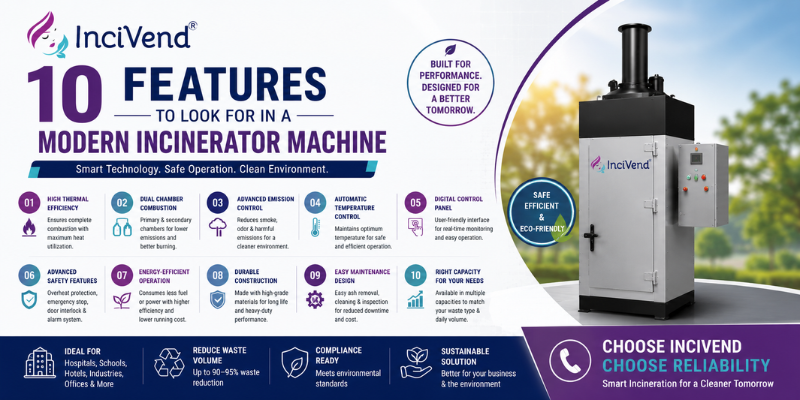
10 Features to Look for in a Modern Incinerator Machine
A modern incinerator machine should offer dual-chamber combustion, high thermal efficiency, low emissions, automatic temperature control, digital monitoring, advanced safety systems, energy-efficient operation, durable construction, easy maintenance, and the right waste processing capacity. These features ensure safe, compliant, cost-effective, and environmentally responsible waste disposal.
At a Glance: Top Features
| Feature | Why It Matters |
|---|---|
| Dual Combustion Chamber | Complete combustion with lower emissions |
| High Thermal Efficiency | Faster waste destruction |
| Digital Temperature Control | Consistent burning performance |
| Low Emission System | Helps meet pollution standards |
| Safety Protection | Protects operators and equipment |
| Energy Efficient Burner | Reduces operating costs |
| Heavy-Duty Construction | Longer service life |
| Easy Maintenance | Lower downtime |
| Automatic Controls | Easier operation |
| Proper Capacity | Matches daily waste generation |
Why Modern Incinerators Are Different
Unlike traditional waste-burning systems, a modern incinerator machine uses advanced combustion technology to destroy waste efficiently while reducing smoke, odor, and harmful emissions.
Today’s machines are widely used in:
- Hospitals
- Schools
- Colleges
- Hotels
- Commercial Buildings
- Manufacturing Plants
- Industrial Units
- Municipal Authorities
- Laboratories
- Government Institutions
Modern systems are designed to improve hygiene, reduce landfill waste, and support environmental compliance.
1. Dual-Chamber Combustion Technology
One of the most important innovations in modern incinerators is the dual combustion chamber.
Why it matters
The primary chamber burns solid waste, while the secondary chamber burns unburned gases at a higher temperature before they leave the chimney.
Benefits
- Lower smoke
- Reduced odor
- Better combustion
- Cleaner emissions
- Improved environmental compliance
Best for: Hospitals, biomedical waste, sanitary waste, industrial waste.
2. High Thermal Efficiency
Efficient combustion saves fuel while increasing waste destruction.
A quality incinerator maintains stable temperatures that ensure complete combustion.
Benefits
- Faster burn cycles
- Less ash generation
- Lower fuel usage
- Higher productivity
3. Low Emission Technology
Environmental regulations continue to become stricter.
Modern incinerators include:
- Secondary combustion
- Smoke reduction systems
- Optimized airflow
- Better combustion control
These technologies reduce particulate matter and visible smoke.
4. Automatic Temperature Control
Temperature directly affects combustion quality.
Advanced controllers automatically regulate combustion temperatures throughout each cycle.
Advantages include:
- Consistent performance
- Better fuel efficiency
- Reduced operator intervention
- Longer equipment life
5. Intelligent Digital Control Panel
Today’s incinerators use user-friendly digital interfaces.
Operators can monitor:
- Temperature
- Burn cycle
- Operating status
- Alarm notifications
- System diagnostics
This reduces human error and improves operational efficiency.
6. Advanced Safety Features
Safety is a critical factor when selecting any waste disposal equipment.
Look for:
- Emergency stop
- Door interlock
- Over-temperature protection
- Heat insulation
- Flame-resistant materials
- Fault alarms
These features help protect both operators and equipment.
7. Energy-Efficient Operation
Fuel costs can significantly affect long-term operating expenses.
Energy-efficient incinerators use optimized airflow and combustion systems to reduce fuel consumption without compromising performance.
Benefits include:
- Lower operating costs
- Reduced energy use
- Better return on investment
- Sustainable operation
8. Heavy-Duty Construction
A durable machine lasts longer and requires fewer repairs.
Look for:
- High-grade steel body
- Refractory brick lining
- Corrosion-resistant materials
- Industrial-quality components
Robust construction improves reliability in demanding environments.
9. Easy Maintenance
Maintenance affects productivity and lifecycle costs.
Choose a machine with:
- Easy ash removal
- Accessible inspection doors
- Replaceable refractory lining
- Service-friendly design
Less downtime means higher operational efficiency.
10. Capacity That Matches Your Needs
Selecting the correct capacity prevents overloading and unnecessary operating costs.
Recommended Capacity Guide
| Daily Waste | Recommended Machine |
|---|---|
| Small Volume | Compact Incinerator |
| Medium Volume | Standard Incinerator |
| High Volume | Heavy-Duty Incinerator |
Choosing the right size improves fuel efficiency and extends equipment life.
How to Choose the Right Modern Incinerator Machine
Before purchasing, evaluate:
Waste Type
- Sanitary waste
- Biomedical waste
- Industrial waste
- Organic waste
- General solid waste
Daily Waste Volume
Estimate your average waste generation to avoid undersized or oversized equipment.
Fuel Type
Consider:
- Electric
- Diesel
- LPG
- PNG
Installation Area
Ensure sufficient ventilation and installation space.
Compliance
Verify that the machine aligns with applicable environmental and pollution-control requirements in your region.
Service Support
A reliable manufacturer should provide:
- Installation assistance
- Operator training
- Spare parts availability
- Preventive maintenance
- Technical support
Common Mistakes Buyers Make
Avoid these common purchasing mistakes:
- Buying based only on price
- Ignoring emission performance
- Choosing incorrect capacity
- Overlooking maintenance requirements
- Not checking safety features
- Purchasing from inexperienced manufacturers
- Ignoring after-sales support
Why These Features Matter
A well-designed modern incinerator helps organizations:
- Improve workplace hygiene
- Reduce waste volume
- Lower landfill dependence
- Minimize operating costs
- Improve worker safety
- Increase combustion efficiency
- Extend equipment lifespan
- Support environmental sustainability
Why Choose Incivend?
Incivend manufactures advanced waste disposal solutions designed for reliable, efficient, and responsible operation. Its machines incorporate modern combustion technology, durable construction, energy-efficient performance, and user-friendly controls to meet the needs of healthcare, educational, commercial, and industrial facilities.
Incivend Advantages
- Modern combustion technology
- Multiple capacity options
- Heavy-duty construction
- Energy-efficient design
- User-friendly controls
- Easy maintenance
- Reliable after-sales support
Frequently Asked Questions
The most important feature is dual-chamber combustion, as it improves combustion efficiency and reduces smoke and harmful emissions.
Hospitals, schools, hotels, laboratories, factories, municipal bodies, and commercial facilities commonly use incinerators for safe waste disposal.
By combining high-temperature combustion, secondary chambers, optimized airflow, and emission-control technologies to minimize smoke, odor, and particulate emissions.
Yes. Energy-efficient machines reduce fuel consumption, lower operating costs, and provide better long-term value.
Select a machine based on your average daily waste volume, waste type, and expected future growth. An appropriately sized unit improves efficiency and reduces costs.
Ready to Choose the Right Modern Incinerator Machine?
Investing in the right modern incinerator machine ensures efficient waste disposal, improved safety, and long-term operational reliability. Whether you need a solution for a hospital, school, commercial facility, or industrial unit, Incivend offers advanced incinerator machines designed for high performance, energy efficiency, and compliance with modern waste management requirements.
Contact Incivend today to explore our range of incinerator machines and let our experts help you choose the best solution based on your waste type, daily capacity, and operational needs.


